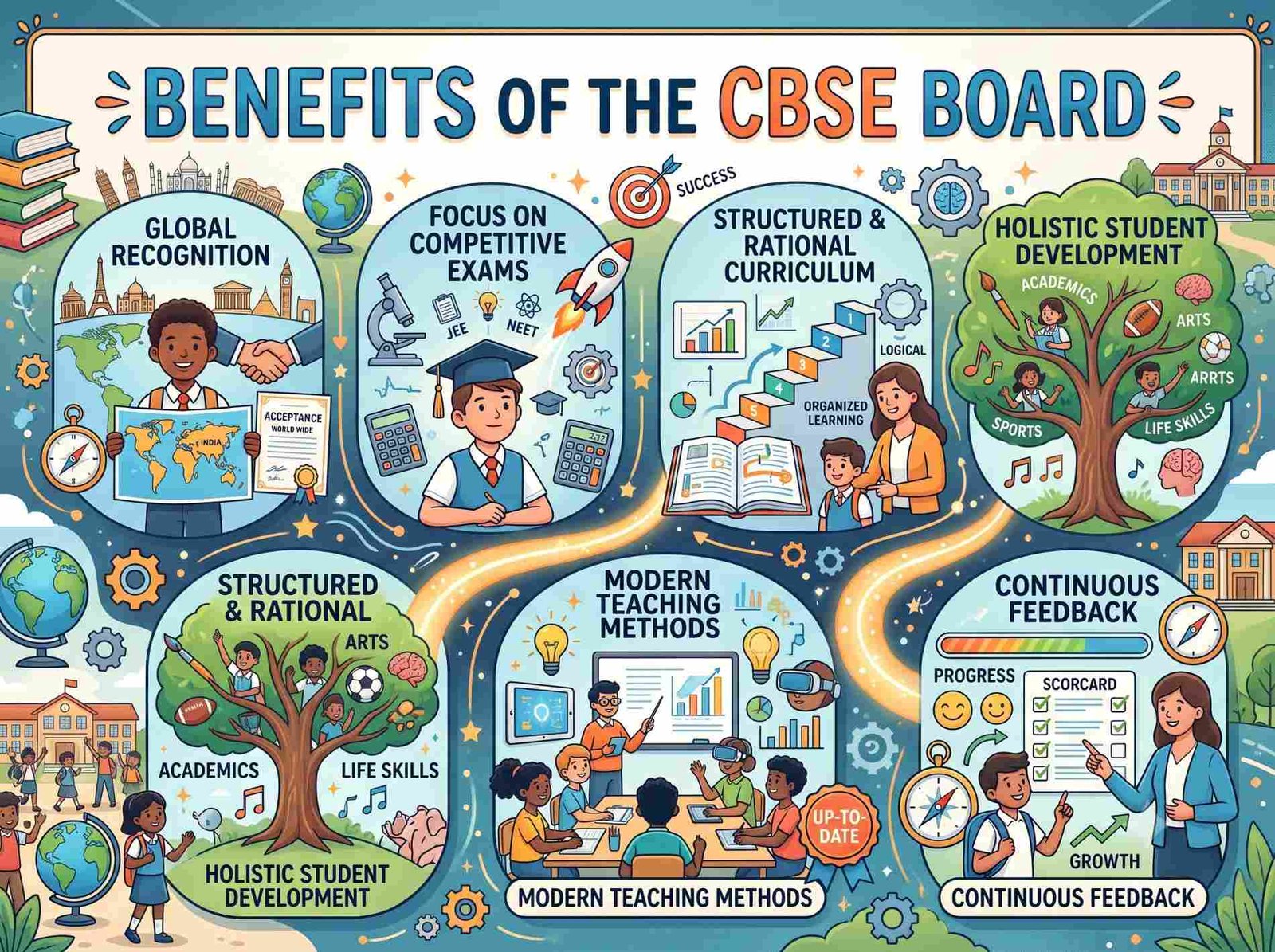
In today’s fast-paced and increasingly complex world, the landscape of education is evolving. A growing number of educators, parents, and academic institutions are recognizing the importance of a holistic approach to education. So, why is holistic education important? Education today is no longer limited to textbooks, examinations, and marks. Schools are now expected to nurture confident, creative, and emotionally balanced learners who can succeed in the real world. This is where the holistic approach to education becomes meaningful. Understanding why holistic education is important helps parents, teachers, and schools prepare children for both academic success and life beyond the classroom.
Holistic learning focuses on the overall growth of students. It develops intellectual, emotional, social, physical, and creative abilities together. Instead of teaching students only to memorize facts, schools encourage students to think independently, communicate effectively, and solve problems confidently. The benefits of holistic education can be seen in enhanced academic performance, emotional intelligence, teamwork, leadership, and self-awareness.
What Is Holistic Education?
Holistic education is an approach to education that focuses on the complete development of a child. It combines academics with values, life skills, creativity, mindfulness practices, and physical activities. In this system, students receive opportunities to explore their talents, build confidence, and connect learning with real life experiences.
A holistic approach helps students learn through activities, discussions, collaboration, and practical experiences. It encourages curiosity and creativity while supporting academic excellence. Teachers also focus on emotions build strategies that help children manage stress, understand feelings, and develop empathy.
Why Holistic Education Is Important in the 21st Century?
The 21st century demands skills beyond subject knowledge. Students today must be adaptable, innovative, emotionally strong, and socially responsible. This is one of the key reasons why holistic education is important.
Modern workplaces value communication, leadership, collaboration, and critical thinking problem solving abilities. Holistic learning prepares students for these challenges by connecting classroom learning to the real world. Children learn how to apply knowledge in real life situations rather than simply memorizing information for examinations.
For example, project-based learning, group discussions, debates, and creative assignments encourage students to express ideas confidently. These experiences prepare students for future careers and social responsibilities.
Benefits of Holistic Education
1. Enhanced Academic Performance
One common misconception is that holistic education reduces focus on academics. In reality, students often show enhanced academic achievement because they feel motivated, engaged, and emotionally supported.
When schools combine academic learning with creative and practical experiences, students understand concepts more deeply. Activities like experiments, storytelling, role play, and collaborative projects make learning meaningful and enjoyable.
2. Development of Emotional Intelligence
Emotional intelligence is an essential life skill. Holistic learning teaches children how to understand emotions, communicate respectfully, and build healthy relationships.
Mindfulness practices, reflection sessions, and classroom discussions help students stay calm and focused. These skills improve confidence, decision-making, and social interaction.
3. Better Critical Thinking and Problem Solving
A holistic approach encourages inquiry and independent thinking. Instead of depending only on memorization, students learn how to analyse situations, ask questions, and find solutions.
Critical thinking problem solving skills are especially important in today’s rapidly changing world. Students become more confident in handling challenges and making responsible decisions.
4. Physical and Mental Well-Being
Physical activities are an important part of holistic education. Sports, yoga, dance, and outdoor learning improve fitness and reduce stress. At the same time, creative arts and mindfulness practices support mental well-being.
Healthy students are more active, focused, and ready to learn effectively.
5. Preparation for Real Life
One of the greatest benefits of holistic education is preparing students for life beyond school. Children develop communication skills, teamwork, leadership qualities, and adaptability.
These experiences help students face real world challenges confidently. They become responsible citizens who can contribute positively to society.
The Role of Teachers and Schools
Teachers play a major role in implementing holistic learning. They create supportive environments where students feel valued and motivated. Schools can encourage students by offering co-curricular activities, leadership opportunities, community projects, and experiential learning programs.
Educational platforms such as wooclap.com support interactive learning experiences that make classrooms more engaging and student-centred. Research discussions from institutions like ut.ac.ir also highlight the growing global interest in innovative educational approaches.
The core elements of holistic learning.
To appreciate the importance of holistic development, we must look at how it restructures the educational experience. Rather than treating subjects in isolation, a holistic learning environment emphasizes the connections between academic disciplines, community engagement, and personal growth.
When students learn in an integrated ecosystem, they begin to understand how their academic knowledge applies to the real world. This approach to education ensures that intellectual milestones are not achieved at the expense of a student’s mental or physical health.
| Dimension of Growth | Key Classroom Focus Areas | Expected Student Outcomes |
|---|---|---|
| Cognitive | Interdisciplinary lessons, analytical projects | Critical thinking, Problem solving |
| Emotional | Self-reflection, mindfulness practices | Self-regulation, Emotional maturity |
| Social | Peer collaboration, community service | Empathy, Strong communication |
| Physical | Physical activities, movement breaks | Healthier lifestyles, Stress relief |
Conclusion.
Understanding why holistic education is important is essential in today’s educational landscape. Academic success alone is not enough for students to thrive in the modern world. Children need emotional intelligence, creativity, communication skills, and resilience to succeed in life.
A holistic approach to education supports the complete growth of learners by combining academics with life skills, physical development, and emotional well-being. By adopting holistic learning practices, schools can nurture confident, compassionate, and capable individuals ready to face the opportunities and challenges of the 21st century.